Company: Zip
Role: Design Systems Consultant — Documentation & Facilitation
Scope: Component usage guidance for 30 components — facilitated cross-functional documentation process and published to Zeroheight design system reference site
Cross-functional facilitation | Component documentation | Information architecture | Content standards
Overview
Process
Each component started as a draft. The team turned it into a decision
I wrote the starting draft — something concrete enough for engineers and designers to react to. The team worked through it asynchronously, leaving comments where something was unclear, contested, or missing.
Those comments are where the real work happened.
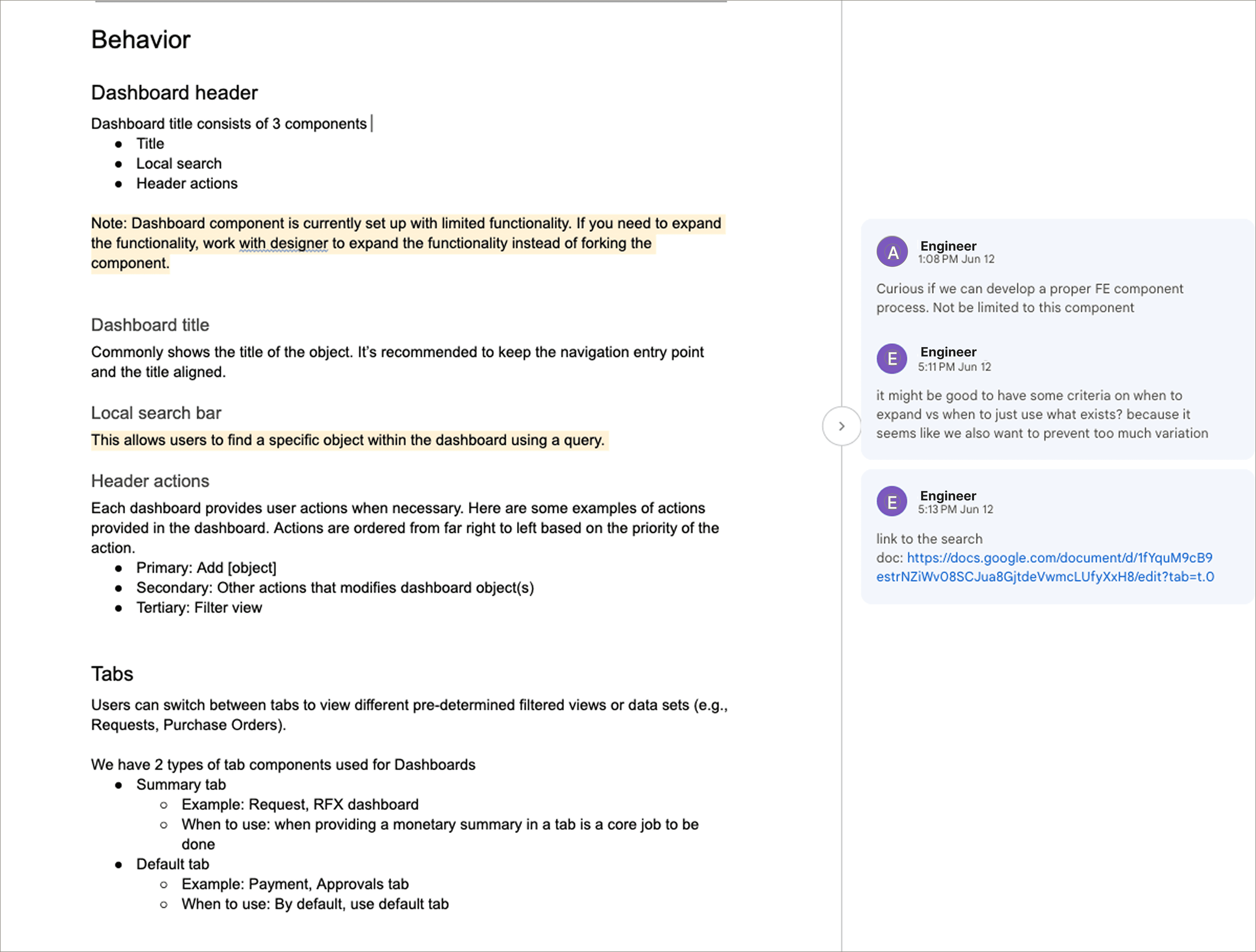
A draft in progress. The guidance sets the terms, the comments negotiate them
Naming decisions that seemed resolved in Figma turned out to be open questions the moment someone had to write them down. A comment asking whether the design team had been consulted wasn't a blocker. It was the process working.
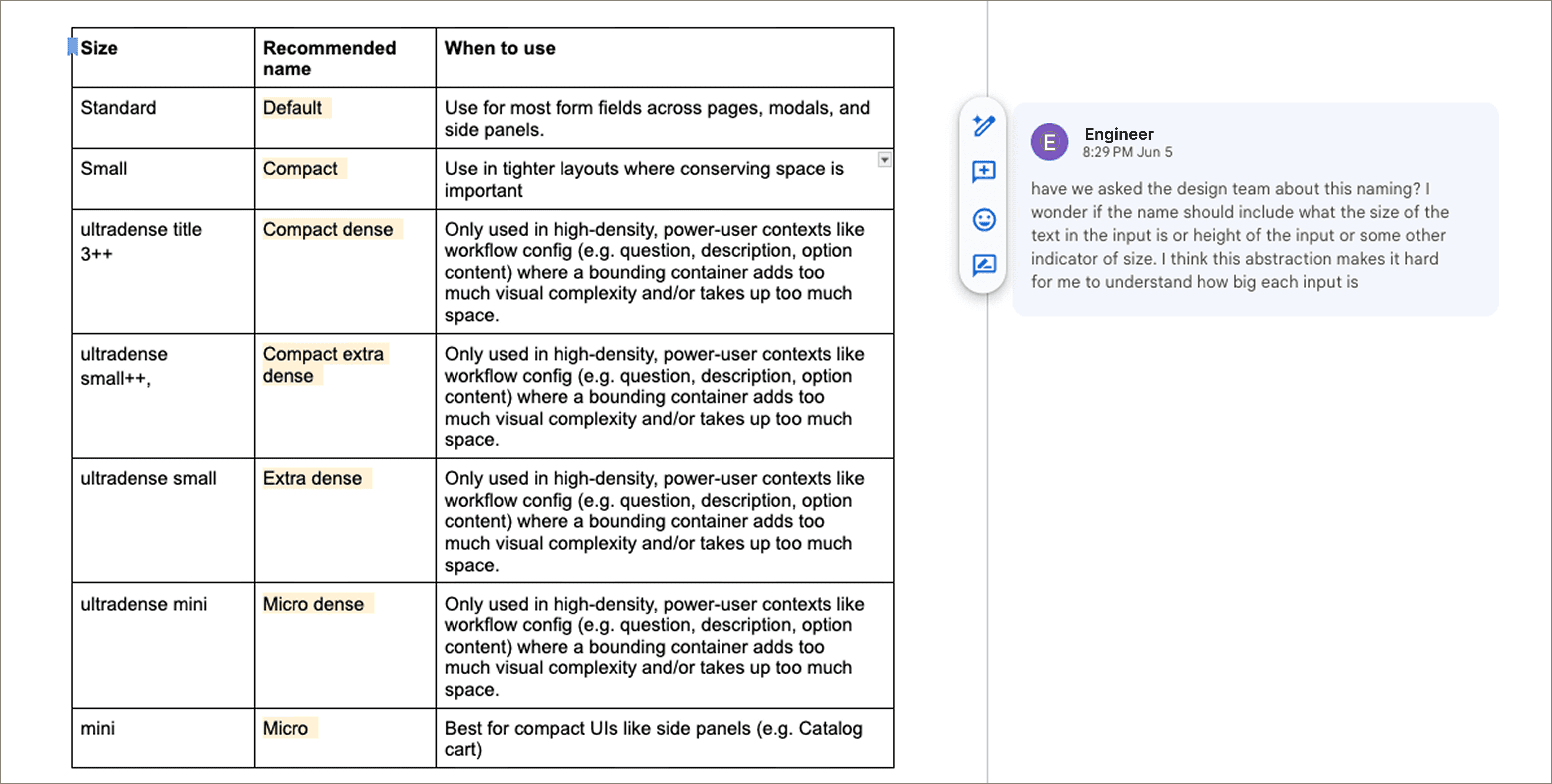
A naming decision that looked resolved in Figma became an open question the moment it had to be written down
Behavior that lived only in someone's memory surfaced the same way. The distinction between how this component handled a selected state and that of a similar component wasn't documented anywhere. The comment thread is where it became documentation.
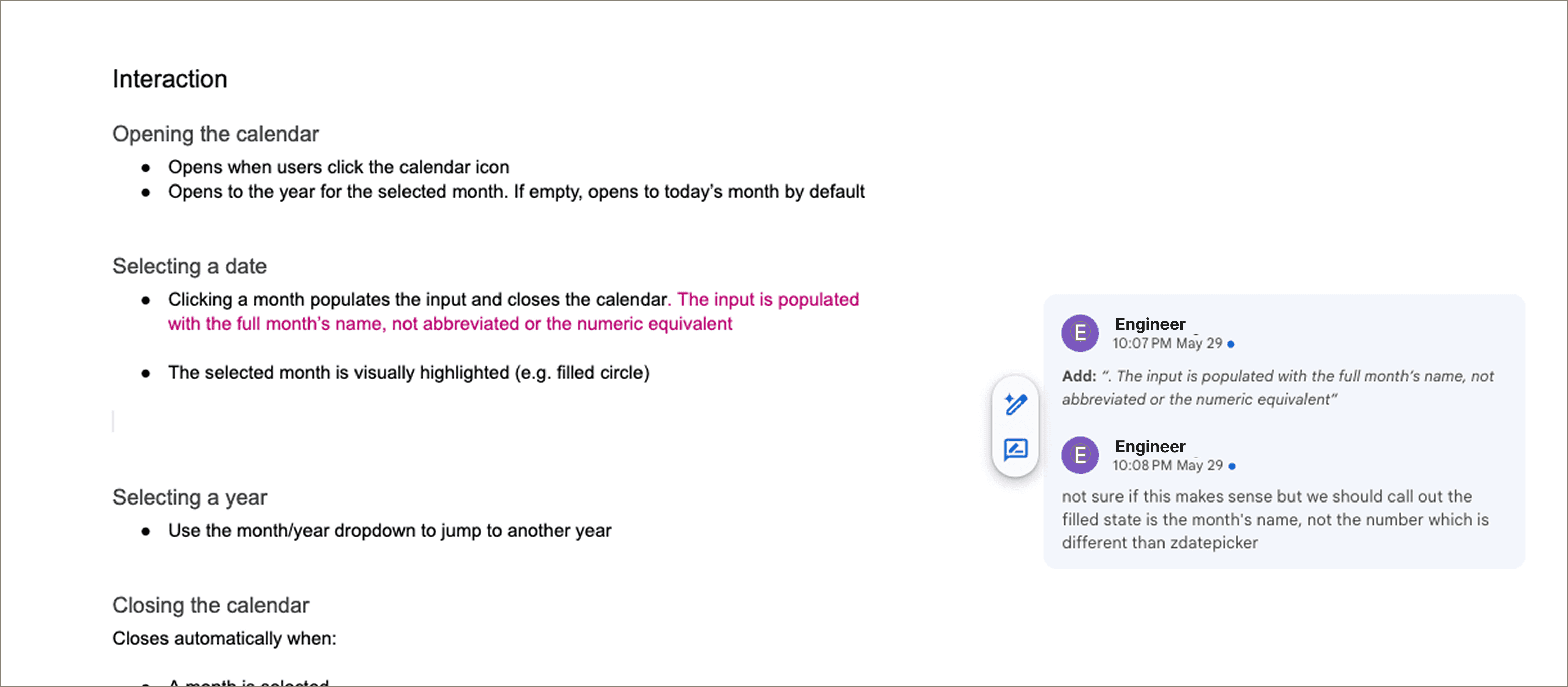
Behavior that lived in someone's memory. The comment thread made the documentation
Information architecture decisions got made in the margins, too. Where does a piece of guidance live? Which component owns it? Those aren't writing questions. They're structural decisions that shape how someone navigates the system.
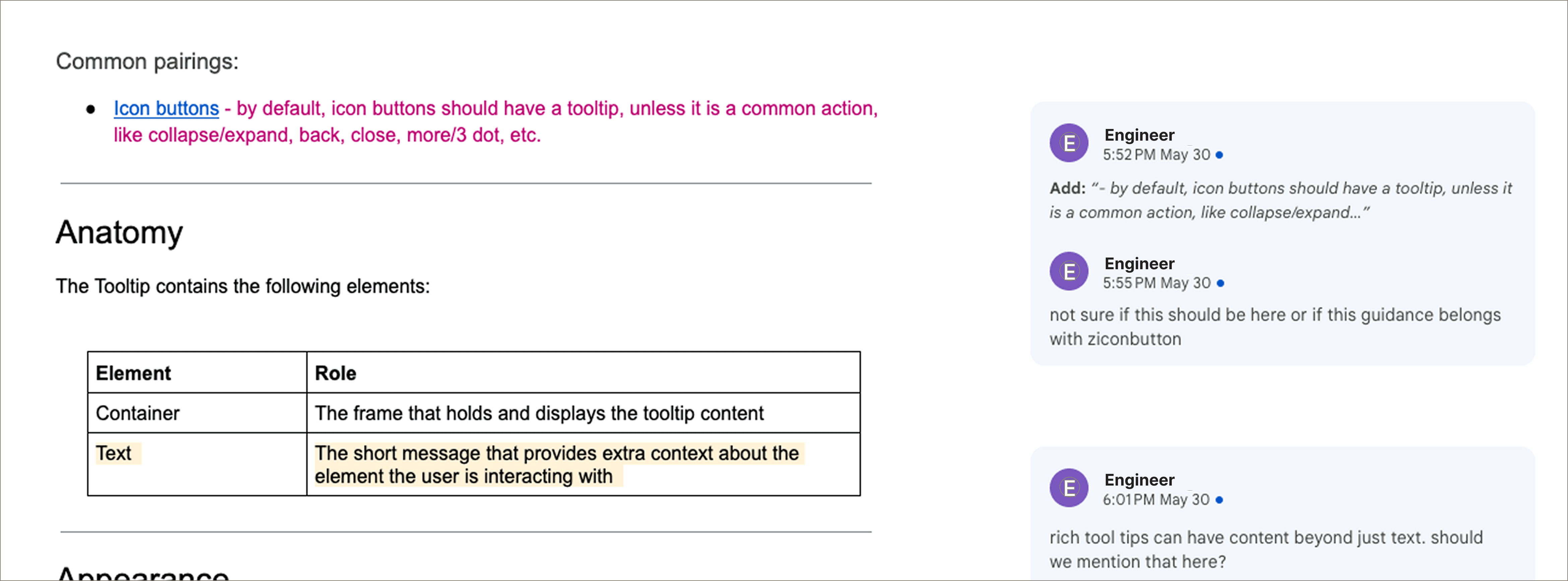
Three comments in six minutes, where guidance lives determines how a system gets navigated
Engineers caught what designers didn't write. Designers caught what engineers hadn't considered. A designer's comment on the global side nav clarified the difference between switching companies and logging out of a user session. That's the kind of distinction that only surfaces when the person who built it is in the room.
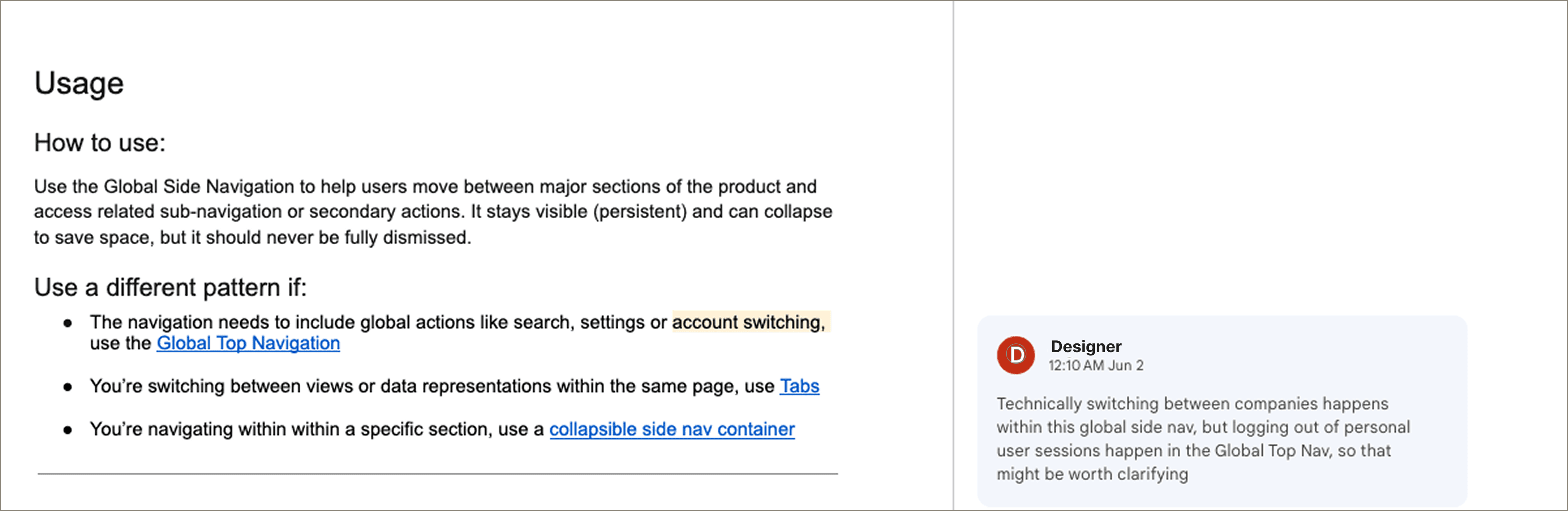
Engineers caught what designers hadn't considered
Some standards didn't exist until someone asked the question. Date formatting, localization behavior: these weren't policies waiting to be documented. They emerged from the process of trying to write them down.
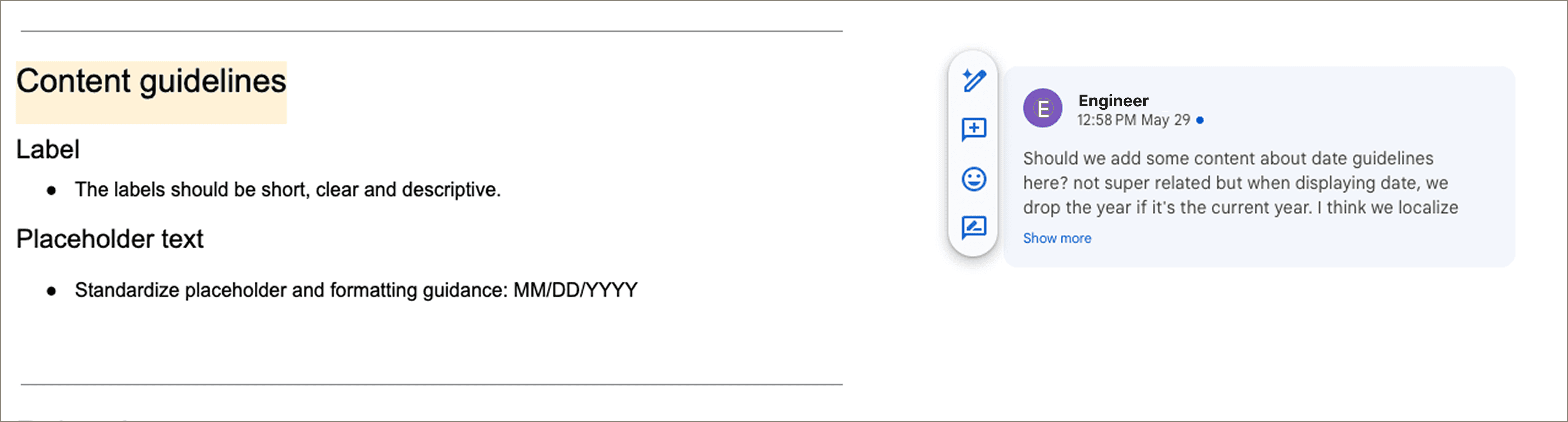
Date formatting and localization weren't policies waiting to be documented. They emerged from the process of trying to write them down
Some decisions extended beyond the document itself. Whether pagination should be its own pattern, how to scope it across contexts: those conversations happened in Slack, fed back into the doc, and shaped the structure of the documentation system as a whole.
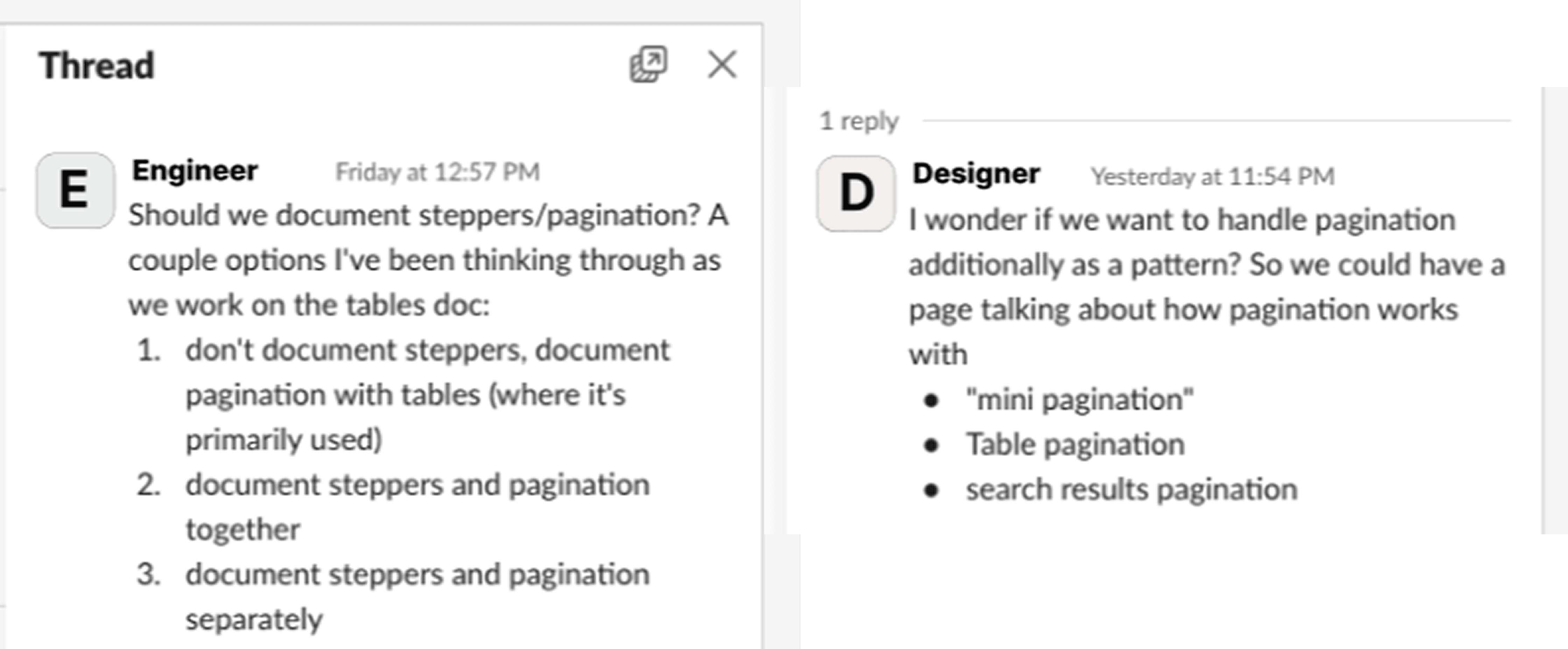
A scope question that started in the doc ended up reshaping the system
Outcome
The documentation didn't just describe the system. It revealed it
The completed guidance for all thirty components was published to a Zeroheight site and became the team's primary reference for the design system. Engineers and designers used it to confirm which components were present in both the design and the code.
That last part matters. The process surfaced discrepancies that hadn't been visible before: components that existed in Figma but not in code, behaviors that had drifted between design and implementation.
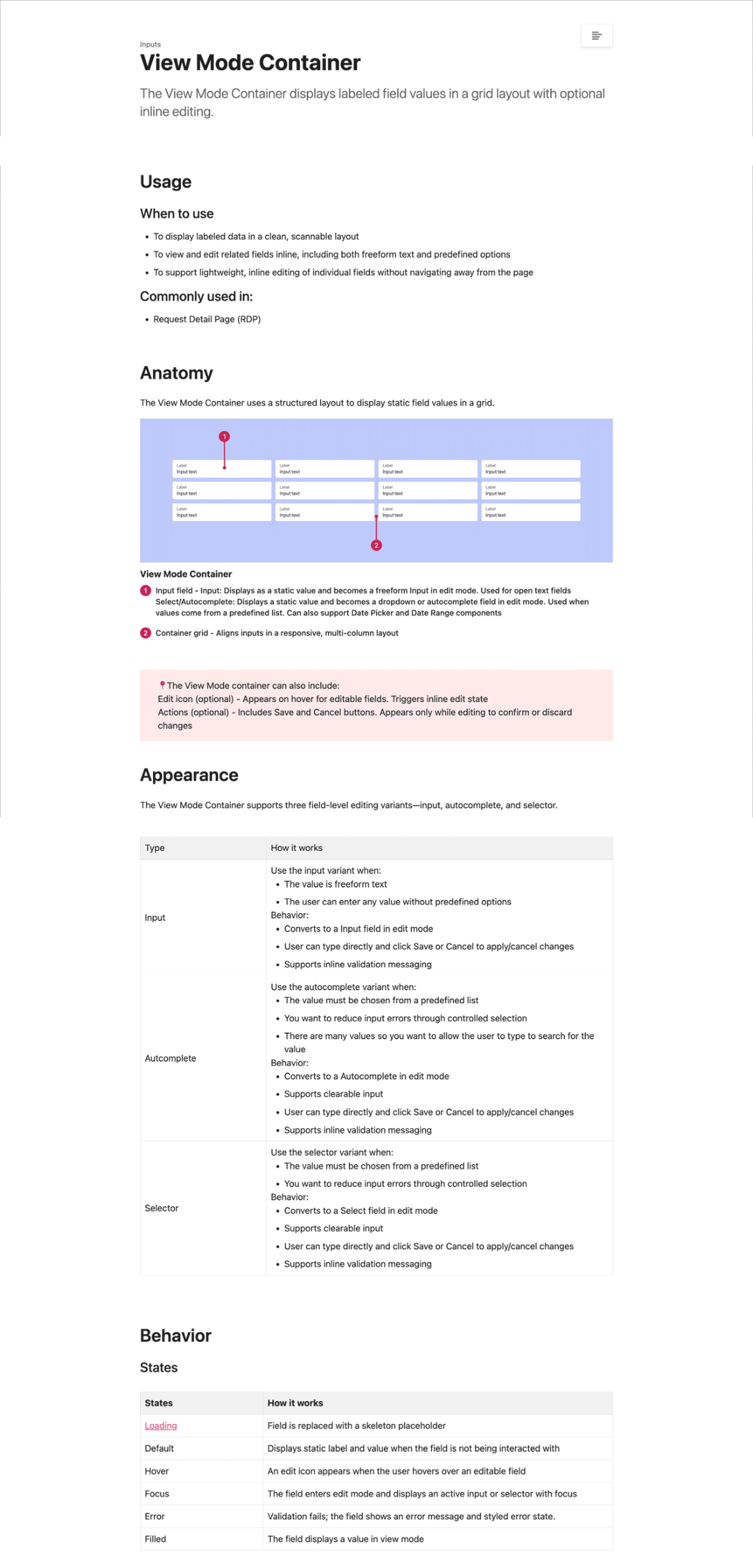
View Mode Container component page, published to Zeroheight
That's what a facilitated documentation process produces that a solo writing effort cannot. When the right people are in the document together, design intent gets captured. Not just what a component does, but what it's for, where it belongs, and what it should never be used for.
The negotiation in the margins becomes the record of those decisions. For any system where documentation will eventually power AI retrieval, that foundation is everything. What got decided in those comment threads: the naming, the behavior distinctions, the scope calls. That's captured design intent. That's what an AI system returns when someone asks a question about a component. The quality of that retrieval starts here.